Taipei Tzu Chi Hospital, Buddhist Tzu Chi Medical Foundation
 2024 National Healthcare Quality Award
Highlights of Workload Reduction
After the system was implemented, workload was reduced by approximately 33.98%, due to the following reasons:
1. Faster access to handover information, reducing handover time Previously, shift handovers required retrieving records bed by bed, taking at least 24.3 minutes. After implementation, the time spent on locating and retrieving records was reduced by approximately 32.1%.
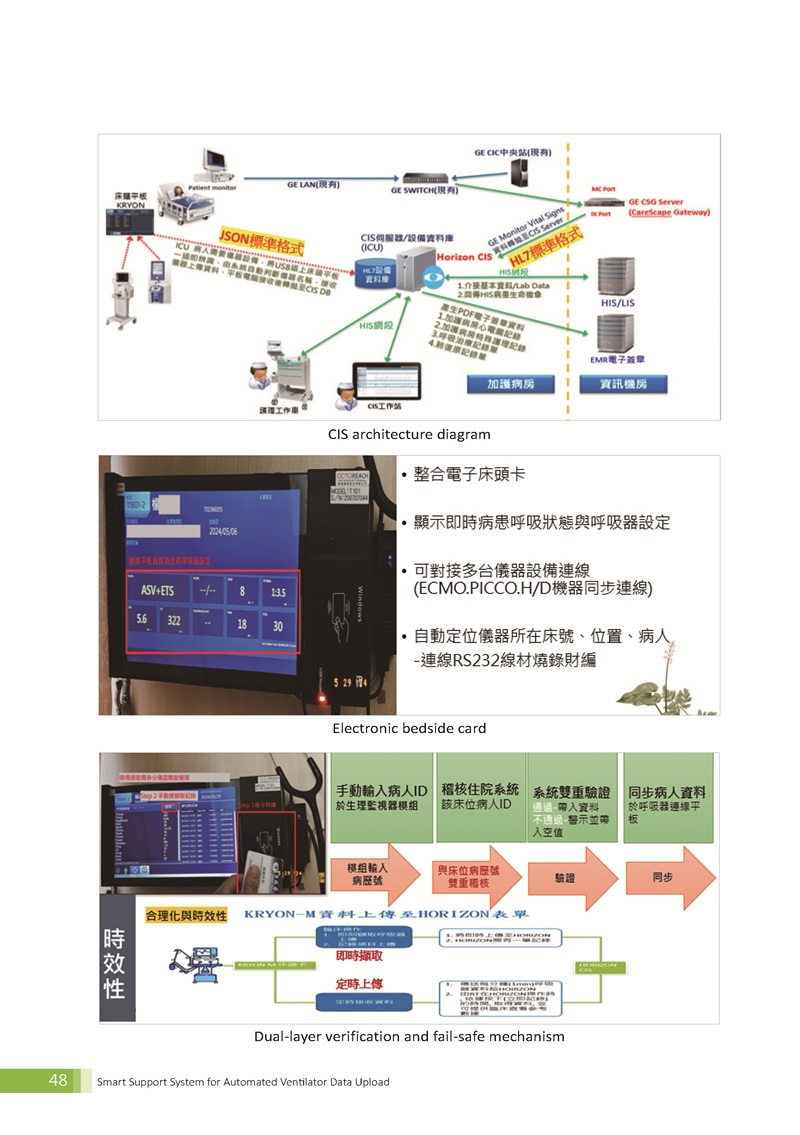
2. CIS system integration reduces patient assessment time The Clinical Information System (CIS) integrates all patient information. Previously, assessing one patient took at least 12.6 minutes. With the system, the time has been reduced to 4.8 minutes, an improvement of around 62%.
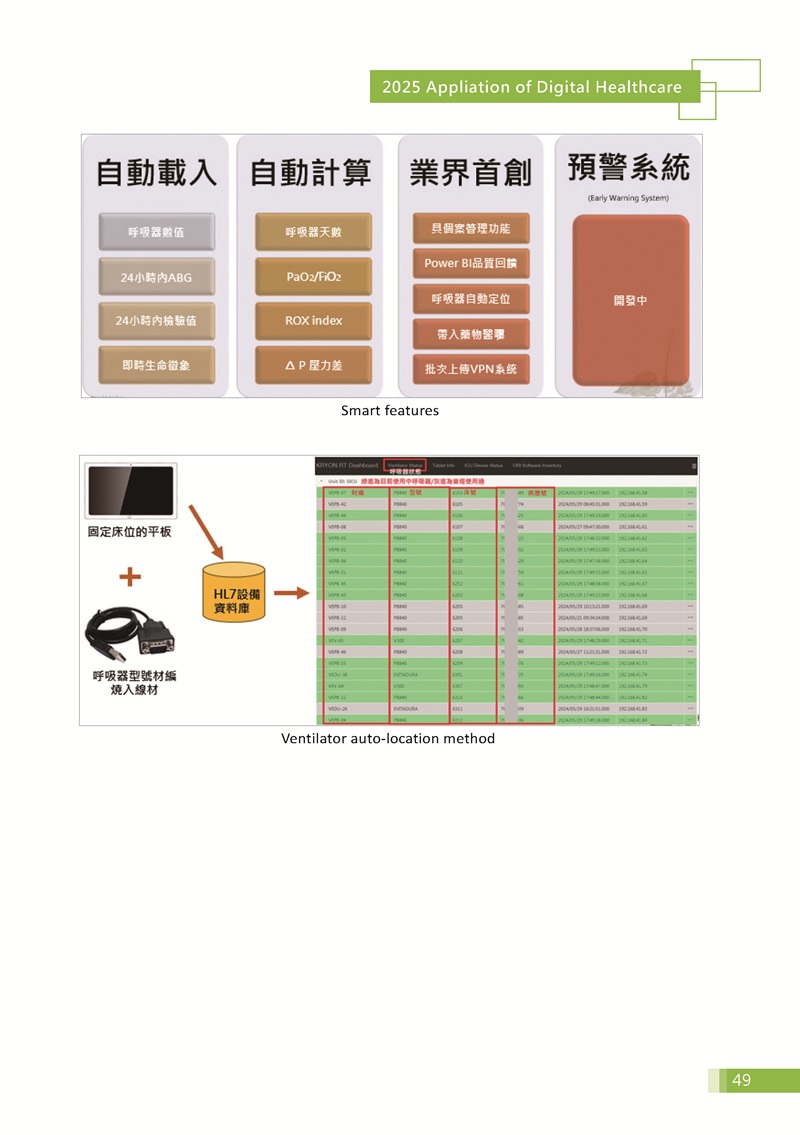
3. Lower case file loss rate and retrieval time In the past, paper records were stored in centralized file racks, often leading to staff competing for access. After digitization via the ventilator data auto-upload system, records can be accessed by multiple users simultaneously. This has brought the case competition and loss rate down to 0%.
4. Remote monitoring reduces unnecessary exposure to infectious patients
During the pandemic, respiratory therapists often had to enter isolation rooms just to check ventilator data--sometimes for issues not directly related to their expertise.
These situations resulted in unnecessary use of protective gear and fatigue. Now, with remote access, therapists can review data, make preliminary assessments, and document findings without entering the room. Frontline staff can then be notified for follow-up, reducing response time and unnecessary exposure.
Source: 2025 Application of Digital Healthecare