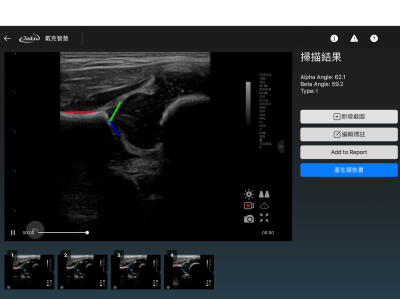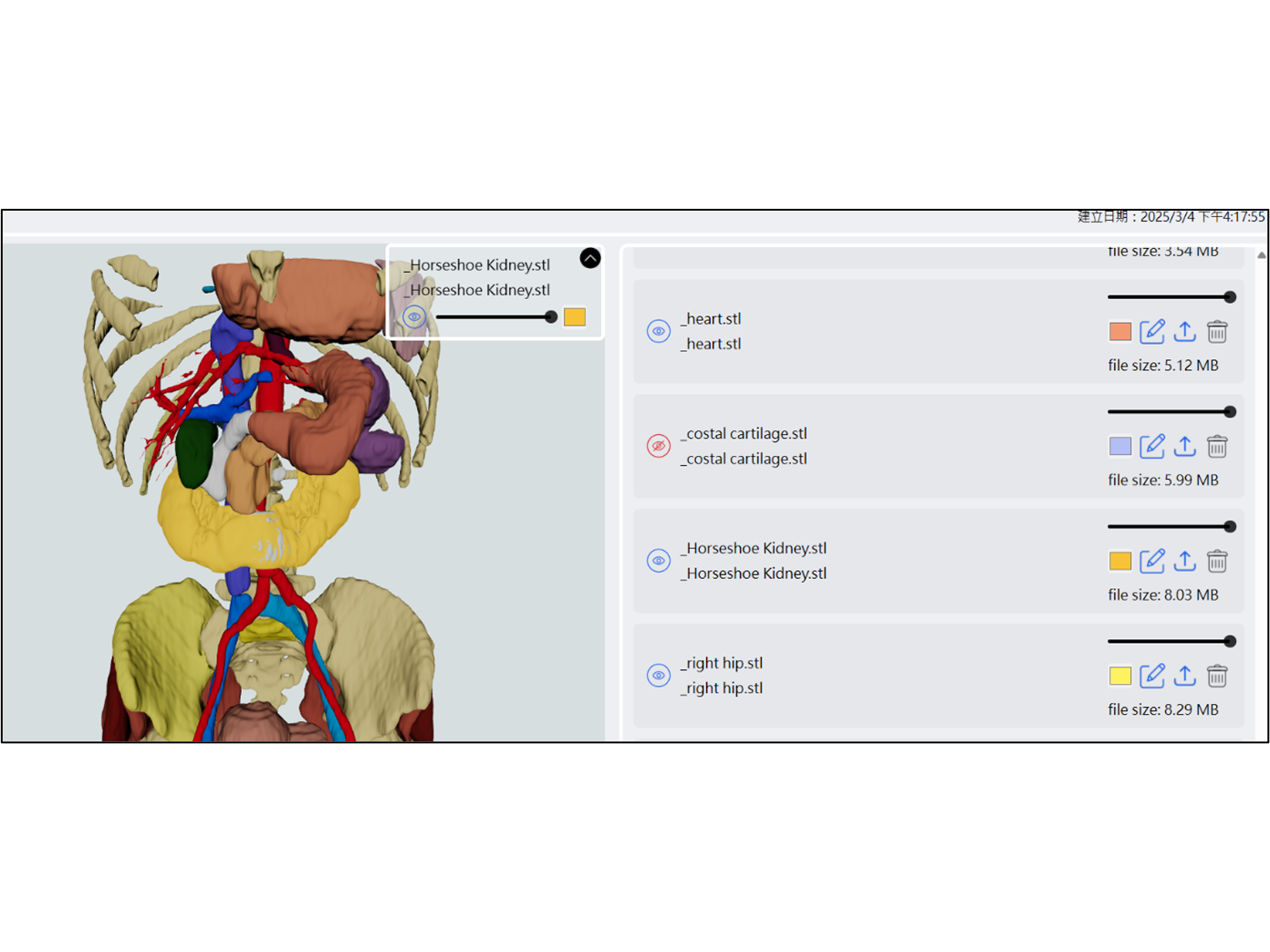
本專案之互動式3D教學平台
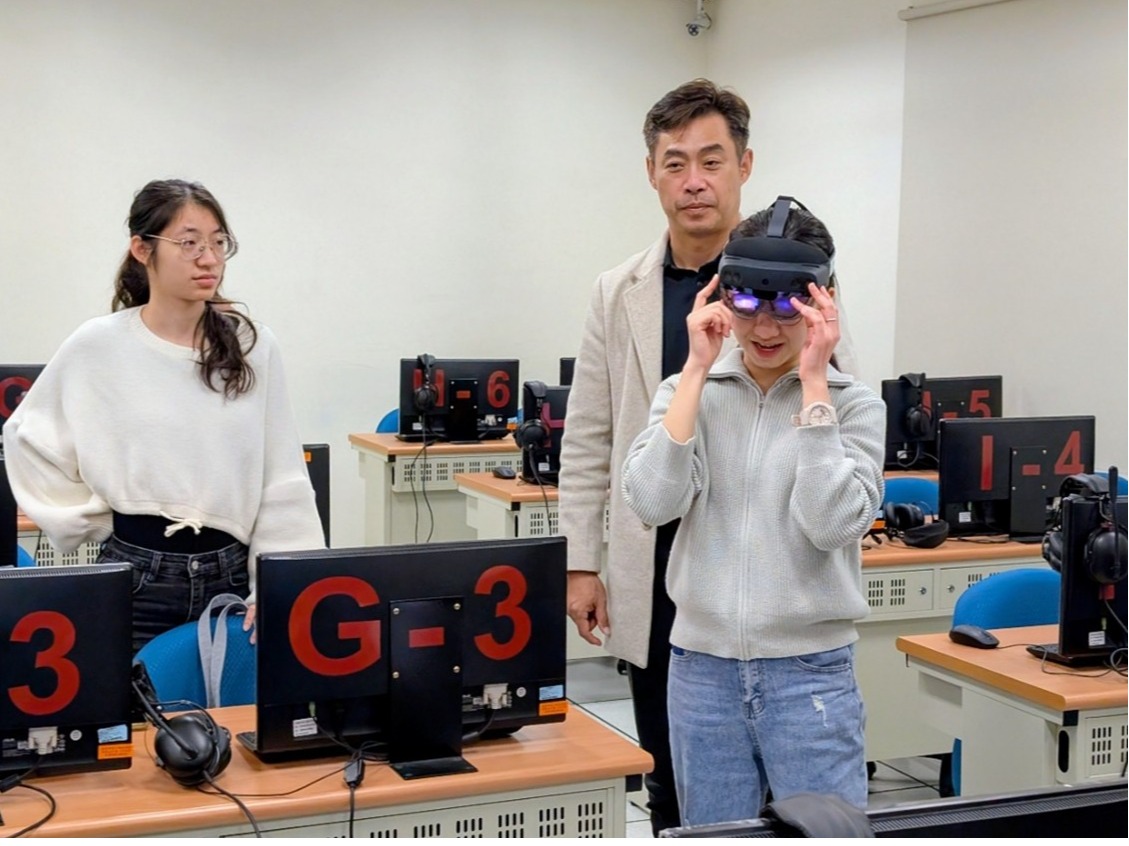
學生使用Microsoft HoloLens 觀看由AI分割的3D器官
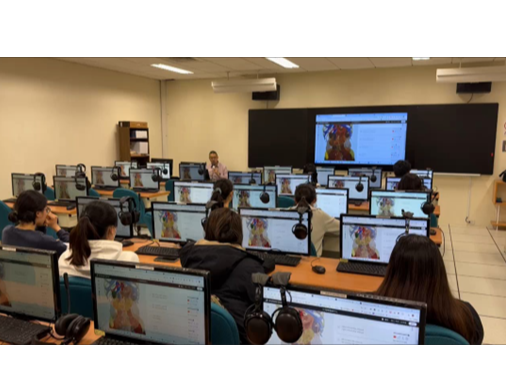
將3D影像投影到大螢幕與學生電腦上課
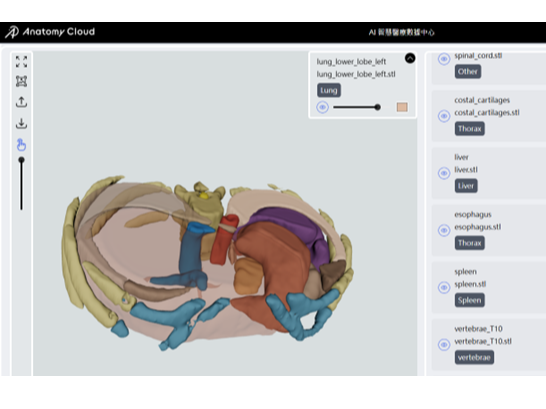
使用AI重組等同於過去大體切片的3D模型
AI-Driven 3D Medical Imaging Anatomy Education: Innovative Application of Fully Automated Organ Segmentation and Interactive Learning Platform
MacKay Memorial Hospital
RIS,Radiology Information System PACS,Picture Archiving and Communication System Smart Hospital Solution Teaching research management system AI artificial intelligence Wearable deviceInformation
Benefits
I. Implementation Experience and Process\n\nThe institution introduced the AI-driven 3D Medical Imaging Anatomy Education Platform (Anatomy Cloud) into the Year 3 medical anatomy curriculum. Pre-implementation surveys (N=20) were conducted to identify student learning challenges; post-implementation assessments (N=14) employed a dual-track approach combining quantitative academic performance measurement and satisfaction questionnaires.\n\nII. Quantitative Learning Outcomes\n\n(1) Significant academic improvement: The final written examination mean score improved from 75.4 to 78.7 (+3.3 points); the pass rate rose markedly from 80.5% to 98.0% (+17.5 percentage points); the proportion of failing students (<60 points) decreased from 19.5% to 2.0%, with the number of students scoring 50–59 dropping from 7 to 0.\n\n(2) Comprehensive enhancement of learning competencies: Post-implementation surveys showed that 100% of students reported improved spatial visualization (92.9% "significantly improved"); 100% reported "significant/substantial improvement" in anatomical structure identification; 100% found the content "very helpful" for understanding clinical applications; overall learning satisfaction reached 4.71/5.0; recommendation intention 4.57; continued-use intention 4.64; and 92.9% of students reported enhanced learning motivation (mean 4.43).\n\n(3) Reduced teacher workload: Lesson preparation time was reduced by approximately 40%, enabling teachers to focus on higher-order instructional interaction.\n\nIII. Extended Applications and Dissemination\n\nThe platform has been extended to pre-operative image communication in Surgery, Radiology, and other clinical departments, with over 50 successful surgical cases completed in collaboration with multiple Taiwanese medical institutions. Future plans include expanding the platform to nursing and physical therapy training, establishing cross-institutional anatomy education resource-sharing mechanisms, and realizing sustainable development of smart medical education.
Other Solutions from This Institute
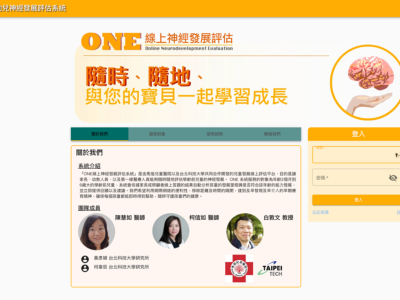
An Intelligent Online Neurodevelopmental
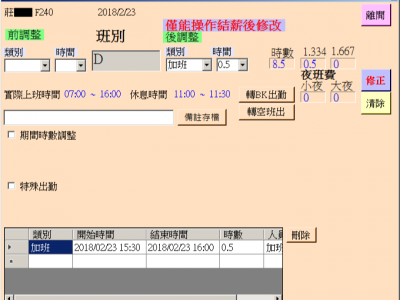
Ready for One Fixed and One Flexible Day
Other Similar Solutions
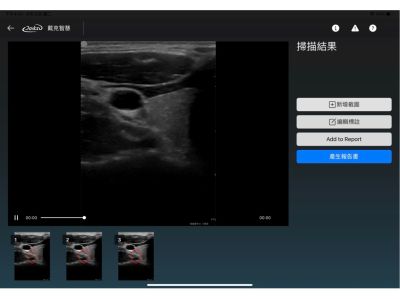
Daikso Thyroid Ultrasound Imaging Markin
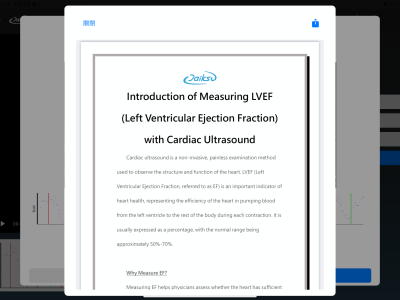
Daikso Cardiac Ultrasound Imaging Markin